Naga Masks
Ruling Caste
The members of this caste have the largest and most elaborate masks. They are often decorated with precious metals and gemstones.Their mask shape is reminiscent of that used by the gods.
Courtier Caste
Their masks aren't as elaborate, but are also decorated with a little bit of metal. Those that have gemstones use more common ones and those that are less valuable. Their mask shape is reminiscent of that used by the gods.
Warrior Caste
There are 4 seperate castes within this caste:
Lancers
Archers
Swords
Defenders
Their masks are almost always white with personalized decorations painted on.
Lancer masks come to a three pronged point at the top and expose the sides of their faces.
Archers have wide, pointed sides and are cut to expose the sides of their faces.
Swords use the same teardrop shape seen in noble masks. It's said that they use this shape as someone from their caste performed a great service to the naga people. The gods, pleased with this, granted them permission to change their mask shape. Their entire face is covered.
Defenders have blocky, tall masks. A small gap at the bottom leaves part of their jaw exposed.
Scholars
Scholars are the only caste with a mask that shows the lower part of their face. This is so they can function across cultures while still conforming to their culture.
Artists
These masks often have an elaborate frill on the top made from stiffened fabric.
Merchants
Merchant masks are made from two different materials. The main part of their mask is plaster. Around their eyes, looking like a second mask, is a secondary material. This second material is different for each family.
Constructors
These masks are the most plain in shape. These simple oval masks generally have very little decoration. The eye holes are longer on the bottom to make it easier for them to see what they're working on.
Farmers and Herdsmen
Their masks are usually made of light fabric. They have large holes around their eyes and a transparent section around their mouths.
Workers
Their masks are plain fabric with reinforced eye holes. They drape down over the face and are held in place with thin cord. Decorations are sewn or embroidered on. Each family of workers has their own type and colour of fabric they use to distinguish themselves from the others.
Priests
Priests have asymmetrical masks with gaps that expose some of their skin. This is because priests often paint those parts of their face to denote which god/goddess they follow. The colour and design of their mask is personalized like every other caste.
Children
While some castes allow their children to go unmasked, more prestigious families start masking their children once they turn 16. Regardless of caste, all naga recieve their adult mask by age 50.
To accomodate a child's growth, their masks are either made of cloth or padded wood and typically only cover the top part of their face. It's expected that a child will go through nearly a dozen of these simple masks before they reach their full growth.
Etiquette
Masks are sacred to their culture and are a key part of their identity. Once a naga has reached adulthood, they wear their mask almost all the time. The only time it is acceptable to be maskless is in their homes. Masks are worn in public, though it is acceptable to be maskless while outside of Athros.
When eating at a public establishment, masks are worn until food is served, and then the mask is on top of their heads to allow them to eat. The exception to this rule is with the scholars, whose masks leave their mouths open.
It's rude to remove ones mask in front of strangers.
In an honour duel, masks are removed. This isn't to prevent damage but rather to put both parties on equal footing in the eyes of their society.
Houseless outcasts have their masks taken from them and destroyed, symbolically killing the naga. To be maskless in naga society is bad.
In Culture
Masks are important to their story telling. Plays are prevalent in their society and so masks are used rather than costumes to represent the characters.
The masks of blind naga have the eyes filled in or covered to show others that they can't see. These individuals don't often use signs to communicate, though that depends on how they lost their sight and how long ago that was. Ones who were born blind don't as they wouldn't have learned it.
Gallery
-

Archer Caste
-

Artist Caste
-

Builder Caste
-

Courtier Caste
-

Defender Caste
-
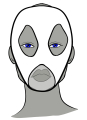
Farmer Caste
-

Lancer Caste
-

Merchant Caste
-

Priest Caste
-

Ruler Caste
-
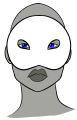
Scholar Caste
-

Sword Caste
-
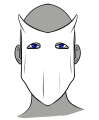
Worker Caste


